
ARTS & CULTURE
☆
ARTS & CULTURE ☆

The Last princess of Punjab exhibition
10/11/2025
Written by Priya Chana
Follow Priya through the Last Princesses of Punjab exhibiton at Kensington Palace, as she learns about Sophia Duleep Singh and the important women who influenced her life.
The Last Princesses of Punjab exhibition touches on the lives of six prominent women within the Indian and British aristocracy; Sophia Duleep Singh, Maharani Jind Kaur, Bamba Müller, Bamba Sutherland, Catherine Duleep Singh and Queen Victoria. I was keen to visit this exhibition, as a Punjabi woman myself, because I wanted to discover more about the lives of the Punjabi princesses as well as the history of the Sikh Empire, both of which I knew little about. In secondary school we were taught briefly about Duleep Singh (the last Maharaja of Punjab) and British Colonialism. We also learnt about the Suffragettes however, we never touched on Sophia, despite her large involvement in the cause.
For context, here is a brief overview of who each of these women were. Let’s start with Maharani Jind Kaur who was the last wife of Ranjit Singh, the father of Duleep Singh. She was the regent to Duleep Singh and spent most of her life fighting to restore the Sikh Empire. Bamba Müller was the young wife of Duleep Singh. She was of Ethiopian and German heritage and was married off to Duleep at just 16 and gave birth to three daughters; Bamba, Sophia and Catherine. Bamba was the eldest daughter and saw herself as the rightful heir to the Sikh Empire. Sophia was a Suffragette and spent a great part of her life fighting for the rights of women. Catherine aided Jewish refugees in escaping from Nazi Germany, and shared a romantic life partnership with Lina Schäfer, cementing her in LGBTQ+ history. Queen Victoria was the longest reigning monarch in Britain before Queen Elizabeth II, ruling for 63 years.
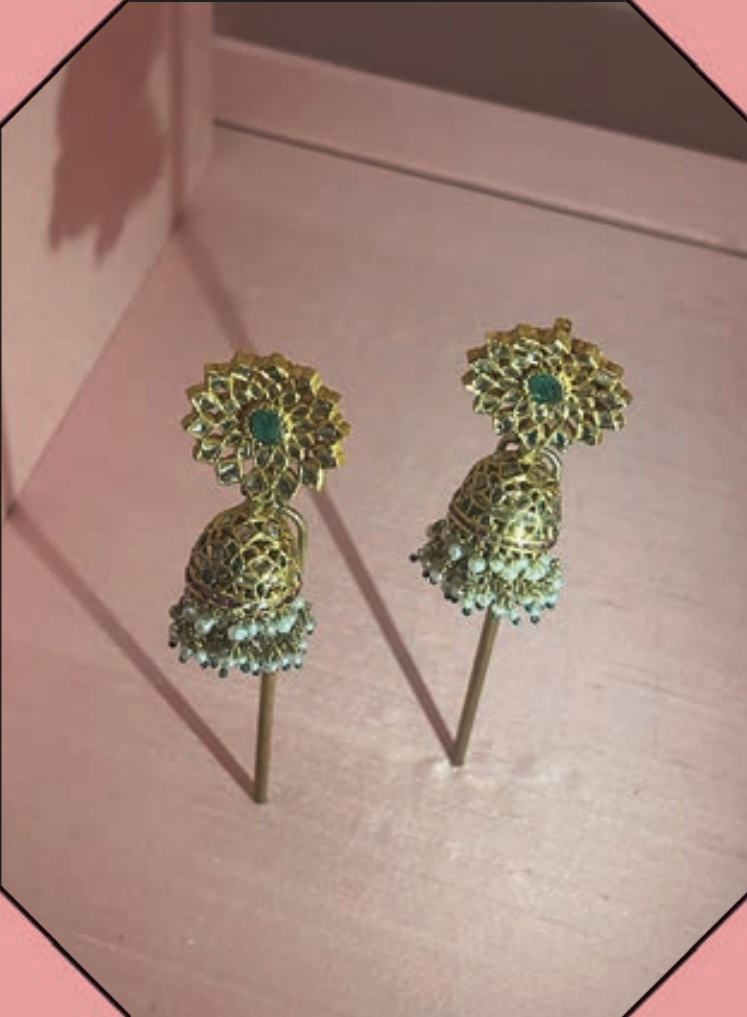
What I loved about this exhibition is that not only did I learn a lot, but it made me feel a lot too and I had incredibly mixed feelings walking through it. I was inspired by the bravery and audacity of the princesses and how they used their resources and privilege to aid the lives of the people less fortunate than them. It was also so special to see the clothes and jewellery that Maharani Jind Kaur and the princesses wore, such as beautiful saree fabric and jhumke. Although these women’s lives were wildly different to mine these cultural staples allowed me to relate to them in a small way. On the other hand, I felt frustration over how the British colonists tricked and schemed their way into claiming India as their own. I was particularly averse to a photo of Queen Victoria wearing the Koh–i–Noor diamond, which was essentially stolen from India (it is still in possession of the British monarchy to this day). To me, this is a reminder that no matter how many times Victoria said she loved Duleep and his family, her empire took him away from his own country and were still holding his people captive. It felt more like she saw Duleep and his family as prized possessions to show off, just like the diamond.
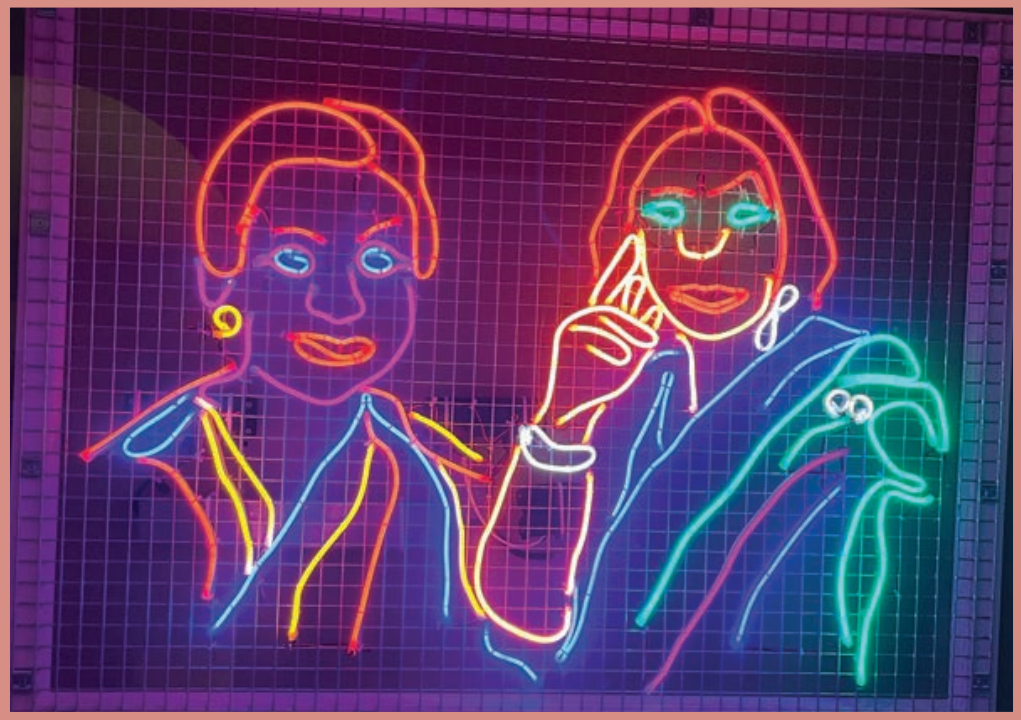
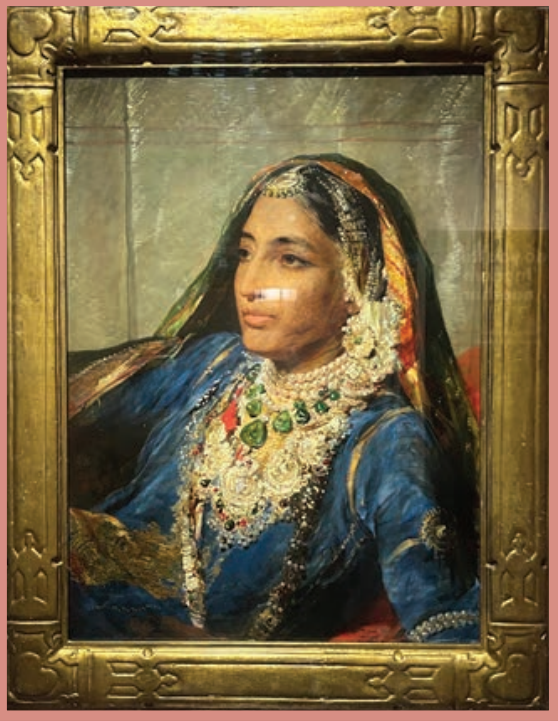
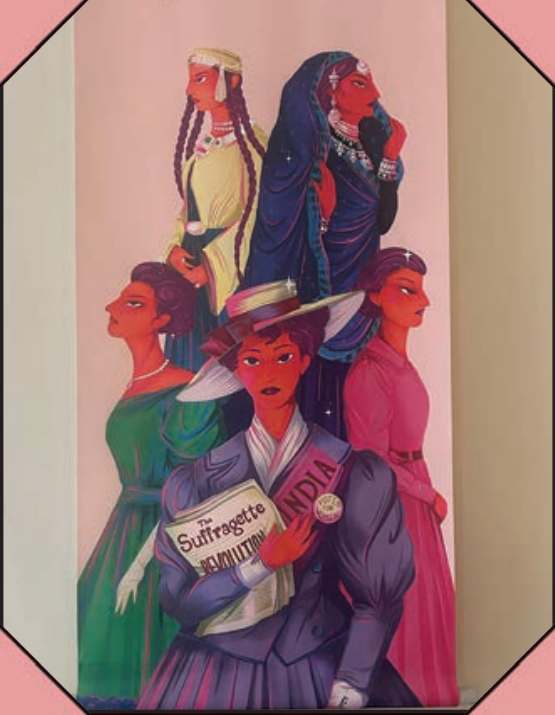
There was also some amazing art featured both from contemporary artists as well as original art from the 1800s. Dazzling neon artworks created by Chila Kumari Singh Burman highlight the key aspects of the women in the exhibition. Two artworks were included; ‘Spangled Sun’ and ‘Suffragette Luv’. There is also a stunning oil portrait of Maharani Jind Kaur by George Richmond, looking regal in her Punjabi attire. So often we see paintings like this of the British monarchy and other white aristocrats in museums, but I loved seeing a Punjabi Queen portrayed in this way. I also have to mention the beautiful cover artwork for the exhibition created by Kushiaania Janda @kushiaania. As much as I was intrigued by the subject matter of the exhibition, I must admit after just seeing this illustration on Instagram for the first time I was sold! I’m so pleased that talented South Asian illustrators are getting amazing opportunities like this and being recognised for their artistry.
It was interesting to hear from different groups of people who were inspired or helped by the princesses. The exhibition featured video interviews from different groups of South Asian women discussing topics such as moving through the world in male dominated spaces or navigating life as a mixed-race person. There were also interviews from some of the Jewish refugees who were helped by Catherine where they discussed their experiences of staying in her house.
The exhibition ended with an interactive display where viewers were invited to tie a ribbon for the woman that they felt most inspired by. The ribbons were colour coded for each woman, creating a beautiful sight to see as a final image leaving the exhibit. I tied a ribbon for Maharani Jind Kaur as I felt most moved by her story. She stayed defiant in the aftermath of the Anglo-Sikh wars and even after she was exiled and had her son Duleep taken from her, she still fought for the reinstatement of the Sikh Empire. Her determination never wavered and even though freedom from the British rule did not happen in her lifetime, she managed to gain freedom from exile and reunite with her son. To me she represents all the strong elder Punjabi women that I know in my life, who have endured hardships to get where they are, but have ultimately provided a better life for the generations that came after.
To conclude I can safely say that this is one of the most thought provoking and interesting exhibitions that I’ve been to. I really recommend that everyone visits this exhibition to learn more about colonial Britain and causes such as the Suffragette movement from a perspective that is not the standard one that we find in our textbooks.